KOGYO QBM-23 Tas Spitz Mod Gas Bicycle Engine Pedal Bike 70S
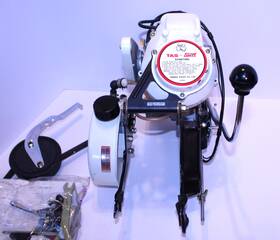
( Brand: Kogyo ), ( Manufacturer Part Number: QBM-23 ), ( Part Type: Pedal Bicycle Engine Bike ), ( Country Of Origin: Japan )
Review KOGYO Tas Spitz Mod Gas Bicycle Engine Convert Pedal Bike To Powered Vtg 70s
The **Kogyo QBM-23 TAS Spitz Mod Gas Bicycle Engine** is a rare and highly sought-after piece of vintage mechanical ingenuity, hailing from the bold, experimental era of the 1970s when off-road adventure and DIY engineering were at the forefront of outdoor recreation. This particular model, designed by the Japanese manufacturer Kogyo, represents a fascinating blend of practicality and audacity, offering pedal-assisted power to bicycles for those seeking extended range or the thrill of motorized exploration without the weight and complexity of a full-fledged moped. The engine itself is a compact yet robust **23cc two-stroke** unit, known for its lightweight yet powerful performance ideal for light-duty tasks like hauling cargo, navigating rough terrain, or simply extending a ride without the hassle of a traditional motorcycle. The **"Spitz Mod"** designation suggests a modified or specialized variant, potentially featuring adjustments for smoother operation, better fuel efficiency, or enhanced durability, making it a favorite among collectors and enthusiasts who appreciate both its historical significance and its functional versatility.
Crafted with the utilitarian spirit of the era, the QBM-23 is designed for easy installation on most standard bicycles, though its retro engineering means it may require some tinkering to fit seamlessly with modern frames. The engine s compact size and minimalist design complete with a simple carburetor, recoil starter, and chain-driven output reflect the no-nonsense approach of 1970s off-road culture, where reliability and simplicity were prized over modern conveniences. The **"TAS"** designation may refer to a specific model variant or a particular series produced by Kogyo, adding to its mystique among vintage engine aficionados. This engine is not merely a piece of machinery; it is a tangible link to a time when adventure was often self-powered, and the idea of blending pedal power with gasoline was both innovative and exhilarating.
For collectors and restorers, the QBM-23 holds a special allure due to its scarcity and the nostalgia it evokes. The 1970s were a golden age for experimental gas-powered bicycle engines, and Kogyo s offerings were particularly well-regarded for their balance of power and portability. While many of these engines have since fallen into disuse or been replaced by more advanced models, the QBM-23 remains a symbol of a bygone era s spirit of exploration and ingenuity. Whether mounted on a classic steel-framed bicycle for a retro-inspired commute or preserved as a museum-quality artifact, this engine embodies the adventurous spirit of its time ready to roar to life with the pull of a cord and the promise of an extended journey. Its vintage charm, combined with its functional utility, makes it a prized find for those who appreciate both history and hands-on mechanical craftsmanship.
### **Overview of the Kogyo QBM-23 Tas Spitz Mod Gas Bicycle Engine (VTG 70s)**
The Kogyo QBM-23 Tas Spitz is a vintage Japanese gas-powered bicycle engine from the 1970s, often referred to as a "gas bike" or "moped engine." These engines were popular in Japan and some Asian markets as lightweight, portable power sources for bicycles, go-karts, or even small vehicles. Below is a detailed breakdown of the pros and cons of purchasing one.
---
### **Pros**
1. **Historical and Nostalgic Appeal**
- The QBM-23 is a classic example of 1970s Japanese engineering, appealing to collectors and enthusiasts of vintage machinery. Owning one can be a unique conversation piece or a centerpiece for a garage or workshop display.
- The "Spitz Mod" designation suggests it may have been a modified or slightly upgraded version, adding to its rarity and desirability.
2. **Lightweight and Portable**
- Weighing around 15 20 kg (33 44 lbs), this engine is relatively compact and easy to handle compared to larger motorcycles or generators. This makes it practical for small projects or as a backup power source.
- Its small size allows for creative applications, such as converting it into a gas-powered bicycle (though this is legally restricted or banned in many regions due to safety and emissions concerns).
3. **Simple Design and Reliability**
- The engine is straightforward in design, with a single-cylinder, air-cooled layout. This simplicity can make it easier to repair or modify compared to modern complex engines.
- Many owners report that these engines are durable if maintained properly, with parts still available from Japanese aftermarket suppliers or eBay.
4. **Versatile Applications**
- Beyond bicycles, the QBM-23 can be adapted for:- Go-karts or dune buggies (common in the 70s and 80s).
- Portable generators or power tools (though efficiency is low).
- Small vehicles like tricycles or microcars (though legal restrictions apply in most countries).
- Its low power output ( 3 5 horsepower) makes it suitable for light-duty tasks where heavy machinery isn t necessary.
5. **Affordability**
- Compared to modern engines or restored classics, the QBM-23 is often sold at a reasonable price, especially if it s in used condition. Prices typically range from $100 to $300 depending on condition and rarity.
- Parts and rebuild kits are relatively inexpensive, making it cost-effective to keep running.
6. **Cultural and Mechanical Interest**
- For those fascinated by Japanese automotive history, this engine represents a transitional period between pre-war simplicity and the rise of modern automotive technology.
- Tinkering with it can be a rewarding hobby, offering hands-on experience with carburetors, ignition systems, and basic mechanical repairs.
7. **Legal Loopholes in Some Regions**
- In countries where gas-powered bicycles are banned (e.g., the U.S., EU, or Australia), some owners have found creative ways to use the engine for stationary applications (e.g., as a generator or workshop tool) without legal issues. However, this is not a guaranteed solution and depends on local laws.
---
### **Cons**
1. **Legal Restrictions**
- In most countries, attaching a gas engine to a bicycle for road use is **illegal** due to safety and emissions regulations. Even if you modify it for off-road use, local laws may prohibit it.
- Some regions classify these engines as "off-road" or "experimental," requiring registration, insurance, or compliance with strict emissions standards. Ignoring these rules can result in fines or confiscation.
2. **Emissions and Environmental Concerns**
- The QBM-23 is an older engine with no modern emissions controls. Running it frequently in populated areas can produce harmful pollutants, making it unsuitable for urban use.
- If used as a generator or for stationary tasks, it may not meet electrical safety standards for indoor use in some jurisdictions.
3. **Maintenance and Reliability Issues**
- Like all air-cooled single-cylinder engines, the QBM-23 requires regular maintenance to avoid overheating, carbon buildup, or piston wear. Neglect can lead to catastrophic failure.
- The carburetor is prone to clogging, and the ignition system may require periodic adjustments. Without proper care, the engine can become unreliable.
- Over time, parts may wear out or become difficult to source, especially if the engine is no longer in production.
4. **Performance Limitations**
- The engine produces very little power ( 3 5 hp), making it unsuitable for heavy loads or high-speed applications. It s not practical for daily commuting or towing.
- Fuel efficiency is poor compared to modern engines, and it may consume more gasoline than expected for the work it does.
5. **Safety Risks**
- Gas-powered bicycles are inherently unsafe due to their lack of modern safety features (e.g., no brakes, poor handling, and no protective casing).
- The engine s proximity to the rider s legs increases the risk of injury in case of a malfunction or accident.
- Carbon monoxide poisoning is a risk if used in enclosed spaces, even as a generator.
6. **Limited Practical Use**
- While creative applications exist, the QBM-23 is not a practical replacement for modern power tools or generators. Its power output is too low for most real-world tasks.
- In regions where gas bikes are banned, even off-road use may be restricted, limiting its utility.
7. **Depreciation and Market Value**
- Vintage engines like this may not hold value over time, especially if they require significant restoration work. Unlike classic cars, there isn t a strong market for these engines unless they are in pristine condition or highly sought after by collectors.
- If you plan to sell it later, finding a buyer may be difficult unless you re targeting a niche audience.
8. **Fuel and Parts Availability**
- While gasoline is still widely available, leaded fuel (which some older engines require) may be harder to find in modern times. This can complicate maintenance.
- Finding authentic Japanese parts can be challenging, and aftermarket parts may not fit perfectly, leading to compatibility issues.
---
### **Ending Conclusion**
The Kogyo QBM-23 Tas Spitz Mod gas bicycle engine is a fascinating piece of automotive history with a unique charm, particularly for collectors, hobbyists, and those interested in vintage machinery. Its lightweight design, simplicity, and nostalgic appeal make it an attractive purchase for the right person. However, its practical utility is severely limited by legal restrictions, poor performance, and maintenance demands.
If you purchase this engine primarily for **collecting, restoration, or as a hobby project**, it can be a rewarding experience, provided you re prepared for the challenges of keeping it running. The engine s historical significance and mechanical intrigue may outweigh its drawbacks for enthusiasts.
If you re considering it for **practical use** (e.g., as a bicycle motor, generator, or workshop tool), the cons heavily outweigh the pros. Modern alternatives such as electric bicycles, portable generators, or even small ATV engines offer better performance, safety, and legality. The QBM-23 is not a practical power source for serious work but rather a novelty item with limited real-world applications.
---
### **Recommendation**
- **Buy it if:**- You re a collector or enthusiast with an appreciation for vintage Japanese engines.
- You enjoy mechanical tinkering and are willing to invest time in maintenance and restoration.
- You plan to use it for stationary applications (e.g., as a generator or display piece) in a legal and safe manner.
- You re prepared to accept its limitations and avoid using it for road or high-risk applications.
- **Avoid buying it if:**- You re looking for a practical power source for daily use, commuting, or heavy tasks.
- You re not comfortable with the legal risks or emissions concerns in your region.
- You lack mechanical experience or the patience to troubleshoot and maintain an older engine.
- You expect it to be a reliable, high-performance tool it is not.
For most people, the QBM-23 is best enjoyed as a **hobby project or a conversation starter** rather than a functional machine. If you re drawn to its aesthetic or historical value, proceed with realistic expectations about its use and upkeep. Otherwise, consider modern alternatives that offer better performance and compliance with current regulations.
Details:
Unused, Never Had Fuel In Tank. Gas Bicycle Engine.
specifications ribicycl:
- brand: Kogyo
- mpn: Qbm-23
- part type: Pedal Bicycle Engine Bike
- country of origin: Japan
offer ribicycl:
- quantity: 1
- started: April 22, 2026
- sold: 0
- availability: In Stock
- options: Ship-to-home
returns ribicycl:
- policy: No Returns
shipping ribicycl:
- transit: 3-8 Days
- class: Standard, Economy, Expedited
- type: Calculated
- cost: $84.76
- service: USPS Ground Advantage, UPS Ground Saver, FedEx Ground Economy, USPS Priority Mail
- carrier: USPS, UPS, FedEx
payments ribicycl:
- wallet: Google-pay
- other
- credit card: Diners-club
general ribicycl:
- condition: Used
- Cycling > Bicycle Components Parts > Other Bike Components Parts
seller ribicycl:
- rating: 100.0%
- # reviews: 2173
- city: Winter Haven, Florida