DIA-COMPE 980-L Cantilever Brake Set Mtb Bmx Diacompe 1980S
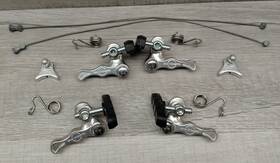
( Brand: Dia-compe ), ( Manufacturer Part Number: 980-L ), ( Position: Front Rear ), ( Brake Type: Cantilever Brake ), ( Color: Silver ), ( Compatible Bike Type: Universal ), ( Set Includes: Brake Pad, Brake Set, Caliper ), ( Material: Aluminum, Steel ), ( Part Type: Brakes )
Review DIA COMPE Vintage Cantilever Brake Set Complete Mtb Bmx Silver 1980
The **Dia-Compe 980-L Cantilever Brake Set** from the late 1980s is a legendary piece of mountain biking and BMX history, embodying the raw, rugged spirit of the era when off-road cycling was still in its rebellious infancy. Designed for durability and performance on the roughest trails and urban terrain, this brake set represents a pinnacle of mechanical simplicity and effectiveness, crafted when precision engineering was still a hallmark of hand-built components rather than mass-produced plastic and composites. The **980-L** designation indicates a larger caliper size, ideal for heavier riders or those tackling steep descents and aggressive riding styles where stopping power was non-negotiable. These cantilever brakes were a staple on hardtail mountain bikes and BMX bikes of the time, prized for their ability to clamp down firmly on rims without the need for complex hydraulic systems or overly sensitive levers. The **1980s design** features a robust, stamped-steel construction with a minimalist aesthetic thick, rounded arms that pivot smoothly around a sturdy axle, ensuring consistent braking force even when laden with mud, gravel, or debris. The brake pads, typically made from semi-metallic or organic compounds, were designed to withstand the abrasive conditions of the era, offering reliable grip without excessive rim wear. This brake set was not just a functional component but a symbol of the DIY ethos of the time, often installed by riders themselves with basic tools, reflecting the self-reliant culture of early mountain biking. Whether mounted on a **Surly, Mongoose, or a custom-built BMX rig**, the **Dia-Compe 980-L** stands as a testament to the ingenuity of a generation that built their own adventure. Today, it remains a sought-after collectible for enthusiasts who appreciate the raw, unfiltered performance of vintage cycling hardware, blending nostalgia with the uncompromising spirit of the trails it was built to conquer.
### **Pros and Cons of Buying a Dia-Compe 980-L Cantilever Brake Set (1980s MTB/BMX)**
#### **Pros:**The Dia-Compe 980-L cantilever brake set, originally designed for mountain bikes and BMX in the late 1970s and early 1980s, remains a sought-after piece for vintage enthusiasts and collectors. Here are its key advantages:
1. **Historical Significance** As one of the first cantilever brake systems for mountain bikes, these brakes represent a pivotal moment in off-road cycling history. They were used by early MTB pioneers and remain iconic among collectors.
2. **Durability and Build Quality** Dia-Compe was known for robust, well-engineered components in its prime. The 980-L features a sturdy frame, strong cables, and reliable mechanical operation, which can still function well if properly maintained.
3. **Compatibility with Vintage Bikes** If you own a late 1970s or early 1980s MTB or BMX, these brakes will fit perfectly without the need for extensive modifications. They were designed for that era s frame and fork standards.
4. **Aesthetic Appeal** The classic Dia-Compe design, with its simple yet distinctive caliper shape and branding, holds nostalgic value. Many riders appreciate the retro look for custom builds or restorations.
5. **Mechanical Reliability** Unlike hydraulic systems, cantilevers are simple and easy to service. With basic maintenance (cable adjustment, pad replacement, and rust prevention), they can provide consistent stopping power.
6. **Modularity** The system allows for easy pad replacement, and many aftermarket options exist for pads and cables, extending their usability.
7. **Lower Cost (Compared to Modern Hydraulics)** While not cheap for a vintage part, these brakes are significantly less expensive than modern hydraulic disc or rim brake systems, making them accessible for enthusiasts.
---
#### **Cons:** While the Dia-Compe 980-L has its merits, there are several drawbacks to consider before purchasing:1. **Age-Related Wear and Rust** Nearly 40 years old, these brakes may suffer from rusted pivots, corroded cables, or degraded pads. Restoration can be time-consuming and may require specialized tools or parts.
2. **Limited Modern Compatibility** If you re using them on a modern bike, you ll need to adapt the mounting points (e.g., fork compatibility, cable routing), which may not always be straightforward.
3. **Performance Limitations** Cantilever brakes are less powerful than modern rim brakes (e.g., Shimano V-Brakes) or hydraulic discs. They rely on friction and leverage, which can be less efficient in wet or muddy conditions compared to contemporary systems.
4. **Maintenance Requirements** Rust is a constant threat, especially in outdoor or damp environments. Regular cleaning, lubrication, and pad replacement are necessary to keep them functional.
5. **Parts Availability** While Dia-Compe parts are still available from vintage suppliers, finding exact replacements (e.g., original pads, cables, or hardware) can be challenging. Aftermarket alternatives may not always match the original fit or feel.
6. **Safety Concerns** If not properly maintained, the brakes may fail unexpectedly. The mechanical nature of cantilevers means they are less "fail-safe" than hydraulic systems, which can self-adjust.
7. **Weight** Older cantilever systems tend to be heavier than modern brakes, which could affect handling, especially on lightweight modern frames.
8. **Resale Value Depends on Condition** If you re buying for investment purposes, the value of a 980-L set is tied to its rarity and condition. A well-preserved example will hold value, but a rusted or damaged one may not.
---
### **Conclusion**
The Dia-Compe 980-L cantilever brake set is a fascinating piece of cycling history with undeniable charm and functionality for vintage enthusiasts. It excels in terms of nostalgia, build quality, and mechanical simplicity, making it ideal for riders who prioritize authenticity and enjoy the process of restoring and maintaining classic components.
However, it is not a practical choice for modern performance riding. The limitations in power, maintenance demands, and compatibility with contemporary bikes make it more suited for collectors, restorers, or those building period-correct MTBs. If you re looking for reliable, high-performance braking today, modern alternatives (e.g., Shimano Deore, SRAM Guide, or hydraulic discs) are far superior.
For the right buyer someone who appreciates history, enjoys tinkering, and doesn t mind the occasional rust battle the Dia-Compe 980-L is a rewarding purchase. For everyone else, it may be more trouble than it s worth.
---
### **Recommendation**
- **Buy if:** You own a vintage MTB/BMX from the late 1970s/early 1980s and want authentic, period-correct brakes. You re willing to invest time in restoration and maintenance, and you value the historical significance over modern performance.
- **Avoid if:** You re looking for a reliable, low-maintenance brake system for daily riding or a modern bike. You prefer hydraulic or high-performance rim brakes for safety and efficiency.
- **Alternative Considerations:**- For vintage bikes, explore other Dia-Compe models (e.g., 980, 980-X) or aftermarket cantilevers like Avid or Shimano s early MTB-specific brakes.
- For modern bikes, invest in a quality rim brake (e.g., Shimano BR-MT400) or hydraulic disc system (e.g., Shimano MT200, SRAM Guide RS).
Ultimately, the 980-L is a "collector s brake" rather than a practical one its value lies in its story, not its utility.
Details:
Vintage Dia-Compe 980 Cantilever Brake Set Complete MTB, BMX -Silver- 1980 's. Excellent Condition.
part #: 980 prices
- $35.19-$82.00
specifications ribicycl:
- brand: Dia-compe
- mpn: 980-l
- position: Front Rear
- brake type: Cantilever Brake
- color: Silver
- compatible bike type: Universal
- set includes: Brake Pad, Brake Set, Caliper
- material: Aluminum, Steel
- part type: Brakes
offer ribicycl:
- availability: In Stock
- started: February 11, 2026
- quantity: 1
- options: Ship-to-home
- sold: 0
returns ribicycl:
- method: Money back
- policy: Returns Accepted
- time: 30 Days
- paid by: Buyer
shipping ribicycl:
- type: Fixed
- cost: $5.95
- carrier: USPS
- transit: 3-8 Days
- class: Standard
- service: USPS Ground Advantage
seller ribicycl:
- city: Lakeville, Minnesota
- # reviews: 2005
- rating: 99.6%
general ribicycl:
- condition: Used
- Cycling > Bicycle Components Parts > Brakes
payments ribicycl:
- wallet: Apple-pay
- credit card: Diners-club
- other
Dia-compe 980 Is Similar To:
- B58 Dia Compe Rear Concave Washer 840226021584 (25% similar) Dia compe rear concave washer BAG-10 product features model fits: 'dia-compe...(October 9th, 2018)
- B76gx Dia-compe 76 Gray Matter 840226050409 (30.1% similar) Please directly for return instructions...(October 11th, 2017)
- B990k Dia Compe Black Brake 840226021911 (30.8% similar) Orders usually ship the same day are placed or following...(September 20th, 2018)
- Br0019 Dia Compe Brs Front Brake Fixie Road Track Reach Grams (31.8% similar) Dia compe Br's 100 road caliper front brake 39-49MM reach gloss white road, Dixie, track 188 grams...(July 31st, 2018)
- Hs0307 Dia Compe Usa Nos Nib Rare (24.4% similar) This is a super rare headset. A total collectors item. Dia compe USA headset inch thread less HS0307NEW old stock. This was the first real thread less headset. Shipping outside of USA available upon request. Any questions, feel free to ask. Perfect for that vintage build...(November 10th, 2018)
- Tech99d-right-black Diatech Used Dirty Harry Brake Lever Dia Compe Ride Left (37.3% similar) Sharp bend for knuckle clearance ad hinged clamp. The detach dirty harry right brake lever. Used in my single speed bike for less than a month. 4MM but has shim to reduce 22. 2MM bars hinged clamp adjustable reach lever clamps fits 25...(July 6th, 2018)
- Vs900 Nos Vintage Set Front Rear Dia Compe Cantilever Brakes Japan (47.4% similar) New old stock, each box has 2 extra dia compe brake pads...(April 22nd, 2018)
- Dia-compe 144h Drilled Non-aero Brake Levers Without Hoods 23.5mm Clamp (36% similar) Dia compe 144H drilled non-aery brake levers without hoods, 23.5MM clamp, these are used vintage levers, with some scrapes and minor cosmetic flaws as seen in the photos. They are clean and in good working condition, ready to install on your classic bike or custom project. I will package everything ...(May 16th, 2024)
- Dia-compe 0587 Vintage Dia-compe Road Bike Brake Levers With Red Hoods Non-aero Japan Drop (50% similar) Gently used, in good working condition. We love to get parts people for the best price possible. Come check us out and save some money on shipping. For drop bars. Made in japan. We love to combine shipping. Please feel free to ask questions about any listing. With red hoods. Look at our offers for a...(August 15th, 2024)
- Dia-compe Ngc-500 Vintage Ngc 500 Brake Caliper Set Silver Gran (52.9% similar) Vintage dia compe Mgc 500 brake caliper set silver - gran. Very good condition. Vintage 1983 '-84...(September 2nd, 2024)
- Dia-compe Gc-400n Vintage Dia-compe Gc 400n Road Side Pull Brake Caliper Set Front And Rear (51.9% similar) Brakes are in good condition with light use and wear, pads - rear has a scratch see pics...(September 8th, 2024)