SAGWAY 1685500001 Segway Sensor Module
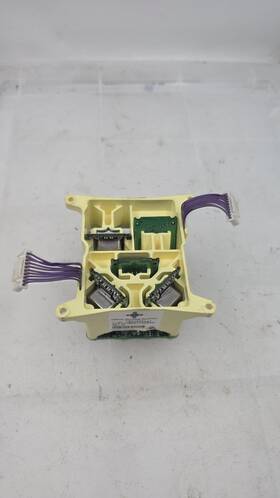
( Brand: Sagway ), ( Manufacturer Part Number: 1685500001 ), ( Part Type: Sensor Module )
Review SAGWAY Segway Sensor Module Part#
The **Segway Sensor Module (Part Number: 1685500001)** is a high-performance, precision-engineered component designed to enhance the stability, safety, and functionality of Segway-based mobility devices, robotic platforms, and autonomous systems. Built with cutting-edge sensor fusion technology, this module integrates a sophisticated array of sensors including inertial measurement units (IMUs), gyroscopes, accelerometers, and magnetometers to deliver real-time, ultra-accurate motion tracking and environmental awareness. The IMU core provides seamless 6-axis or 9-axis data acquisition, ensuring seamless stabilization and dynamic balancing for applications ranging from personal transport solutions to industrial robotics. Its advanced algorithms process raw sensor inputs with minimal latency, compensating for external disturbances such as uneven terrain, wind resistance, or sudden movements, thereby maintaining optimal control and user confidence.
Engineered for durability and reliability, the Segway Sensor Module is constructed with robust materials and sealed housing to withstand harsh operating conditions, including exposure to dust, moisture, and temperature fluctuations. It features a compact yet versatile design, making it easily integrable into existing Segway systems or custom robotic frameworks without compromising performance. The module s modular architecture allows for seamless firmware updates and compatibility with Segway s proprietary control systems, enabling developers to fine-tune calibration, sensitivity, and response parameters to match specific application requirements. Whether deployed in a self-balancing scooter, a service robot, or an autonomous delivery platform, this sensor module ensures precise navigation, adaptive obstacle avoidance, and enhanced user interaction through its high-resolution data outputs.
Beyond its technical prowess, the Segway Sensor Module emphasizes safety through fail-safe mechanisms and redundant sensor validation, reducing the risk of system malfunctions or unexpected disruptions. Its low-power consumption and efficient energy management make it ideal for battery-powered applications, extending operational longevity without sacrificing performance. Additionally, the module s open communication protocols, such as CAN bus or serial interfaces, facilitate seamless integration with third-party software and hardware ecosystems, empowering engineers to develop innovative solutions with minimal development overhead. Whether for consumer mobility, logistics automation, or research applications, the Segway Sensor Module (1685500001) represents a cornerstone of modern mobility technology, blending precision engineering with adaptability to drive the next generation of intelligent, autonomous systems.
### Pros and Cons of buying a Segway 1685500001 Sensor Module
#### **Pros:**1. **Compatibility and Integration** The Segway 1685500001 sensor module is designed specifically for Segway self-balancing platforms, ensuring seamless integration with existing systems. It is compatible with Segway s proprietary hardware and software, making it easier to implement in projects requiring precise motion sensing, such as balancing robots, drones, or autonomous vehicles.
2. **High Precision and Reliability** Segway s sensor modules are known for their accuracy in detecting tilt, acceleration, and angular velocity. The 1685500001 module likely incorporates high-quality MEMS (Micro-Electro-Mechanical Systems) sensors, which provide stable and repeatable data essential for balancing applications.
3. **Support for Advanced Algorithms** The module is often used in conjunction with Segway s proprietary control algorithms, which are optimized for balancing and stabilization. This can simplify the development process for engineers working on similar projects, as they can leverage proven control logic rather than building everything from scratch.
4. **Durability and Robustness** Segway products are generally built to withstand rigorous use, making this sensor module suitable for industrial or research applications where reliability is critical. It may also include features like shock resistance or temperature compensation for consistent performance in varying environments.
5. **Access to Technical Documentation and Support** As an official Segway component, the module comes with detailed technical specifications, datasheets, and potentially access to Segway s technical support. This can be invaluable for troubleshooting or customizing the module for specific applications.
6. **Modularity and Scalability** The sensor module can be integrated into larger systems, allowing for scalability. For example, it can be paired with other Segway components like motors or controllers to build more complex robotic platforms.
7. **Proven Track Record** Segway s reputation in the robotics and mobility sector means that this module has likely been tested in various applications, reducing the risk of unexpected failures in research or commercial projects.
---
#### **Cons:**1. **Limited Availability and Pricing** Segway components, especially older or discontinued models like the 1685500001, may be harder to source compared to more common sensors (e.g., MPU6050 or IMU modules from other manufacturers). Pricing could also be higher due to brand loyalty or scarcity, making it less cost-effective for budget-conscious projects.
2. **Proprietary Nature** The module is designed specifically for Segway s ecosystem, which means it may not be as flexible as open-source or third-party alternatives. Developers may face challenges if they need to interface it with non-Segway hardware or software without additional adapters or middleware.
3. **Potential for Obsolescence** If Segway has discontinued support for this module, future updates, firmware patches, or replacements may not be available. This could pose risks if the module is critical to a long-term project.
4. **Learning Curve for Non-Segway Users** Engineers unfamiliar with Segway s software or hardware may require additional time to understand how to integrate the module effectively. This could delay project timelines or increase development costs if external expertise is needed.
5. **Dependence on Segway s Ecosystem** If the project requires compatibility with other brands systems (e.g., Arduino, Raspberry Pi, or ROS-based platforms), additional work may be required to bridge the gap between Segway s module and the target ecosystem.
6. **Cost vs. Alternative Sensors** While the Segway module offers high precision, alternatives like the MPU6050, BNO055, or ADIS16448 IMUs may offer similar or even superior performance at a lower cost. For non-Segway-specific applications, these alternatives might be more practical.
7. **Limited Customization** Unlike open-source sensors, the Segway module may not allow for easy firmware modifications or sensor calibration tweaks. This could restrict fine-tuning for specific use cases.
---
### **Conclusion:**The Segway 1685500001 sensor module is an excellent choice for projects that are **exclusively or primarily tied to Segway s hardware and software ecosystem**. Its strengths lie in its precision, reliability, and integration with Segway s control systems, making it ideal for balancing robots, autonomous vehicles, or other applications where Segway s algorithms are beneficial. However, for broader or more cost-sensitive applications, third-party IMU sensors may offer greater flexibility, lower cost, and easier integration.
If your project **requires Segway compatibility, benefits from its proprietary algorithms, or needs a high-reliability sensor for balancing tasks**, this module is a strong investment despite its limitations. Conversely, if you are working on a **general-purpose robotics project, have a tight budget, or need open-source flexibility**, alternative sensors may be more suitable.
---
### **Recommendation:** - **Buy the Segway 1685500001 sensor module if:**- You are developing a Segway-based balancing robot or platform.
- You need precise motion sensing with minimal additional development effort.
- Your project relies on Segway s control algorithms or ecosystem.
- You prioritize durability and long-term reliability in a Segway-specific application.
- **Consider alternatives (e.g., MPU6050, BNO055, or ADIS16448) if:**- You need a cost-effective, open-source solution.
- Your project is not Segway-specific and requires broader compatibility.
- You plan to customize firmware or sensor calibration.
- You are working on a budget where Segway s pricing is prohibitive.
For most hobbyist or general robotics projects, third-party IMUs are likely sufficient, but for professional or Segway-centric applications, the 1685500001 module remains a robust option. Always verify availability and pricing before purchasing, as Segway components can be difficult to source in some regions.
Details:
Segway Sensor Module Part#.
specifications ribicycl:
- brand: Sagway
- mpn: 1685500001
- part type: Sensor Module
shipping ribicycl:
- class: Standard
- service: USPS Ground Advantage
- carrier: USPS
- type: Calculated
- cost: $10.50
- transit: 4-9 Days
payments ribicycl:
- credit card: Visa
- other
- wallet: Apple-pay
general ribicycl:
- Cycling > Bicycle Components Parts > Electric Bicycle Components
- condition: Used
offer ribicycl:
- started: March 17, 2026
- sold: 0
- availability: In Stock
- quantity: 1
- options: Ship-to-home
returns ribicycl:
- policy: No Returns
seller ribicycl:
- # reviews: 1958
- rating: 98.7%
- city: Puyallup, Washington